Moon Escape Far and Near

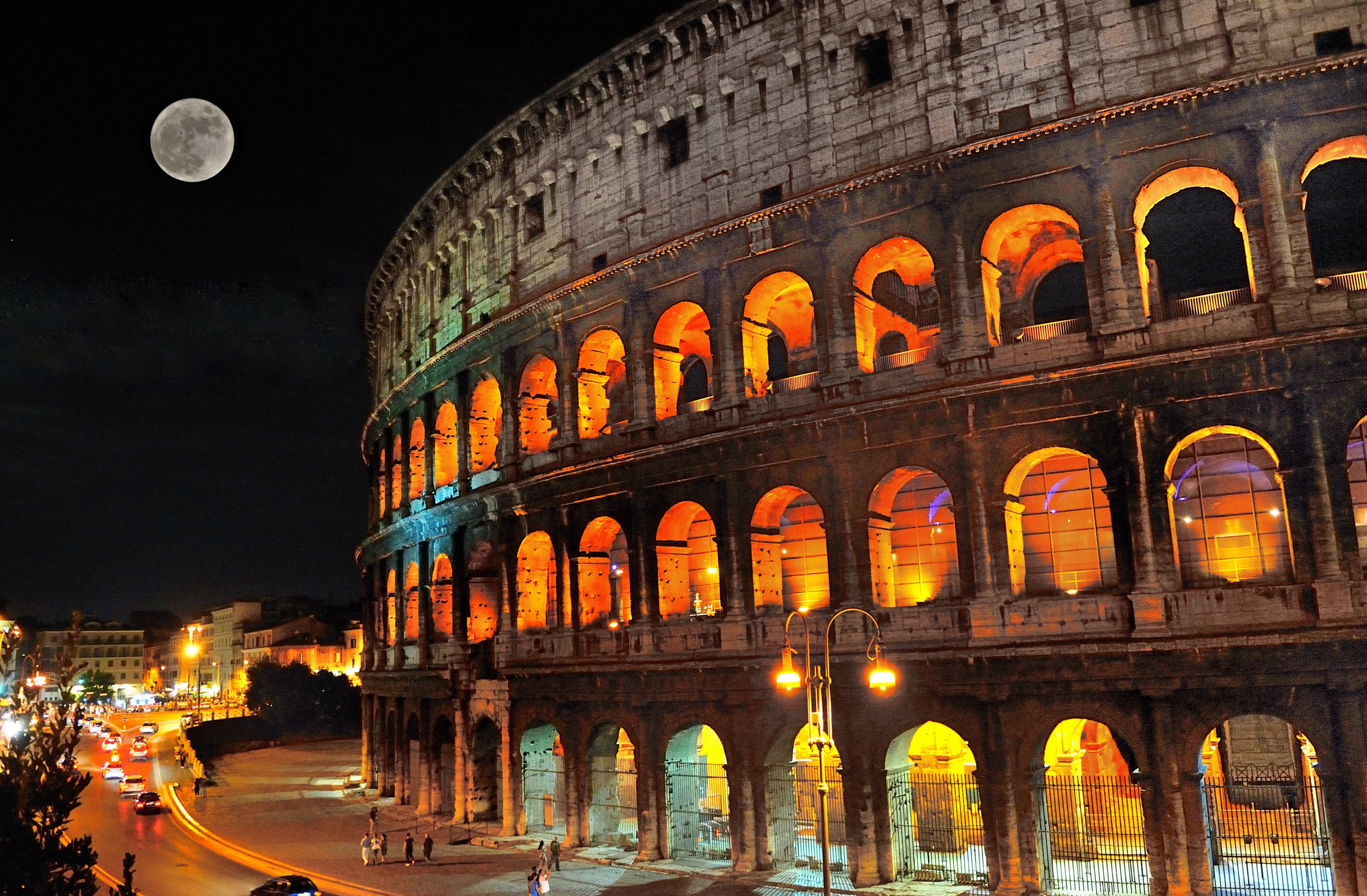
Yes, I went to Rome. Yes, I witnessed this breathtaking full-moon rising, with the Colosseum in all its night glory. So yes, I was there the night of this photo. But no, I did not take it. But yes, I was with the photographer who did.

His name is Dan Pope. We traveled to Rome with he and his wife, long-time friends, celebrating anniversaries. Dan is well-known for his stunning photography, but also his kind and generous heart. While Dan went at it with his professional equipment, the rest of us savored the surreal night, coupled with a perfect July evening temperature.

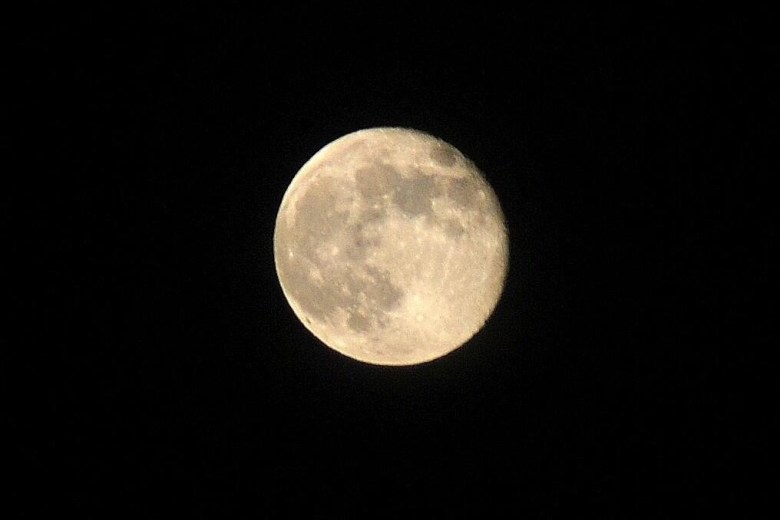
And now bring time up to one month ago and my backyard. With help from Wenjie Zhang on how to photograph the moon, I set up the tripod and camera settings exactly as he recommends. I did not have as powerful a lens as he but I was very pleased. Aside from cropping this photo is unedited.

20130820-213605.jpg

As to what the full moon brings out in me, it’s just one word–joy. I don’t morph into anybody different, nor have the desire to be anyone more … or less. Let’s just say I become more fully who I am. With a full moonscape turning my yard into an enchanted forest, how can I not?

Daily Prompt: Full Moon–Nighttime

The Kaleidoscope Collide

I wonder if flowers could talk or had human emotion or had the ability to reason, would they dwell in prejudice against the color of another flower? Would they judge and resent, even hate one another because of the color of their petals? And not just the color that separates them, but the different varieties?

The hydrangea differs due to differing acidity. The daisies in the photo below have colors that are man-induced. These colors do not naturally occur in nature. They were “created”. Not the flowers but the colors. Why did someone do this? Doesn’t it add to their brilliance, bring a smile to our face, and increase our joy?

Aren’t we awestruck and delighted by the very nature of their differences? Their color and composition is completely at the mercy of their maker. They cannot help what color they are. But do we complain? Do we harbor resentment because of the multitude of color?

Then why do we do this with the greatest stain on humanity?
All of us know deep within our hearts that racism is wrong. Yet, we are all racist. All of us. Just admit it. It was taught and modeled before us. Children are not born racist. They are taught racism.

It’s okay to admit it but we must go further. We must fight it. We must fight it within ourselves and we must fight it outwardly. But how is this done?

Think of the recent Olympics. For a wondrous moment every nation was at peace. We watched the very best athletes parade into the stadium and what a sight it was! Did it not take your breath away to see the vast array of different cultures, different colors both in costume and skin?

Great Britain (Team GB) - Parade of Nations - ...

Did any of us have a racist or prejudiced bone in our body during those wondrous seventeen days? I theorize the Creator’s original intent may have been what we witnessed at the Olympics. Why would He be so risky as to create his image-bearers in different colors? Perhaps it was meant to bring joy, to rejoice, to bring color to the world. Just pure joy.
He created everything and said, “It was good.”

So if nature teaches us to appreciate, even delight in the of the myriad of color, can we not do more to appreciate rather than spurn the different skin colors?
After all, it’s all just a matter of a mere .012% melanin.

This is written in response to the Daily Post Weekly Writing Challenge titled “A Splash of Color”.
http://dailypost.wordpress.com/2012/10/15/weekly-writing-challenge-a-splash-of-color/

This is also a response for the Story Challenge Letter “R” posted on FlickrComments. “R” for Racism.
http://flickrcomments.wordpress.com/2012/10/30/story-challenge-letter-r/

Photo of Olympics 2012 Parade of Nations courtesy of Zemanta.

Weekly Photo Challenge | Silhouette

The Weekly Photo Challenge theme this week is “Silhouette”. Some of you  have seen this already. Forgive me for reposting as I now realize WordPress wants a current post rather than a revision of a previous.

This photo is of a sunset I took in February. Winter is my least favorite season but sunsets like these provide rich arrays of color to remind me that all seasons possess their own beauty. The bare branches allowed a view of the sunset not possible in warm seasons. The crisp air and humidity with slight cloud cover allowed a mixture of hues that danced their way into evening sleep. The graceful curves of the tree branches wove a beautiful pattern as if adorning the sky in a great big hug.

These reminders make the barren season bearable when I am impatient for spring. This one is worth clicking on for a larger view.

Enjoy … again.
Peace,
Alexandria

Here is the Weekly Photo Challenge link for “Silhouette”
http://dailypost.wordpress.com/2012/10/19/weekly-photo-challenge-silhouette/

Other interpretations:
http://dailypost.wordpress.com/2012/10/19/weekly-photo-challenge-silhouette/
http://hamburgundmeehr.wordpress.com/2012/10/19/weekly-photo-challenge-silhouette/
http://ayearinmyshoes.wordpress.com/2012/10/19/wordpress-photos-challenge-silhouette/

I am entering this as my “best shot of 2012” on the following site:http://flickrcomments.wordpress.com/2012/12/02/your-best-shot-2012/

Healthcare: Good, Fast, Cheap. You Only Get Two. | Guest Author

Capitalism brings Americans an abundance of products and our mindset is very clear. When it comes to purchasing we want everything good, fast, and cheap.
Think about it.

  • We want high quality—good.
  • We want it readily available—fast.
  • And we want it affordable—cheap.

But there is something I don’t think we realize. You see, in nearly all of life, you can only have TWO.

Never THREE.

ONE is always sacrificed.

If the product is good and always available, it will not be cheap. If the product is fast and cheap, it will not be good.

Think about McDonalds or KFC. The food is fast and cheap but not very good on any culinary scale. Think about out-of-season citrus. It is good and available, but it is not cheap.

The Palm (restaurant)Ever heard of a restaurant called The Palm? There are several in the United States and they have a reputation as one of the finest. The food is exceptional {good}, and its served in a timely manner {fast}, but since it’s prepared fresh to your exact preference from the finest ingredients, it’s expensive {not cheap}. When it comes to any restaurant, my wife and I agree—you get what you pay for.

We may not like it but we’ll automatically accept a price if the goods meet two of the qualifications, never even realizing we didn’t get all three.

And this is a very important aspect that is about to affect our lives deeply.

Morsani Center for Advanced Health Care

It’s regarding healthcare.
And this is the little secret that no one wants to discuss.

  • We want all three.
  • Our politicians are promising all three.
  • But we can’t have all three.

The American healthcare system was built on the premise that healthcare should be the best possible {good} and should be instantly available {fast}. By the above definition, we know it has to be expensive {not cheap}.

To carry out the goal of less expensive healthcare, we must accept a reduction in quality or availability {bad/slow}.
If you want to keep it cheap, quality must decline. A cheaper system rewards doctors less pay. This discourages the best and brightest from choosing medicine as a career. The debt burden is just too costly. At this moment a new graduate doctor will not pay off medical school loans until age forty. From a practical standpoint, who will choose medicine as a career?

Another result is it discourages industry from developing innovations to improve healthcare.
Cuba has a health care system that is an example of cheap and available but the quality is substandard when compared to the United States. There are procedures and surgeries totally unavailable. I recently offered to go to Cuba to teach a procedure that is readily available in the United States. They were interested but don’t have the equipment nor has the procedure ever been done in the island nation. Innovations have been totally absent from this nation for decades.

Canada FlagAn excellent example of the good-but-slow approach is Canada.
Overall, Canadians have good healthcare, but they often wait months for solutions that would occur quickly in the United States. The healthcare products retain quality and the price is cheaper. But the natural byproduct is shortages, creating great frustration. If this were not the case, Canadians near the border would not cross into the United States for surgical solutions to their problems that would otherwise take months to get.

For example, a woman with a rotator-cuff tear needed an MRI. Her appointment was one year away. Then surgery would be another year off. She came to the United States and had everything done in one month. At age 71 she continues her hobby as a long-distance cyclist. Incidentally, her husband died of colon cancer due to the Canadian system not covering colon screenings.

Another concern are further pay cuts to hospitals and physicians.Doctor's Office (Tools of The Trade)
With universal healthcare a government has to cut expenses in several ways. A big way they do this is cutting reimbursement to physicians and hospitals. When government sets a fixed price for a hospital or doctor, expecting the same quality, the only option is less available healthcare.

This already occurs in our system with Medicare and Medicaid. Medicare patients without a primary care physician have problems establishing themselves in a new practice. Medicaid patients are not seen in certain practices or there are limitations on the amount seen.

In the end, this will drive many hospitals and doctor’s offices out of business.
Clearly, with the upcoming deeper pay cuts, some hospitals will have to close and surveys have demonstrated that up to 40% of doctors plan to stop seeing Medicare patients. Like many other physicians, I love the relationships I’ve built over the years with my patients. But the planned fee schedule cuts could make it impossible to deliver the same personalized care that so many of us want to provide.

To stay in business, changes will have to take place and this will impact either quality or availability. What a disappointment to both of us—the providers and the patients.

Controlling healthcare costs is a great idea.
Unfortunately, it will have a natural outcome of either decreasing quality or availability. Price fixing in any market results in reduced availability or quality. Either can be acceptable options as long as people are aware of what’s coming.
But are these acceptable?

To pretend we can have high quality healthcare that is readily available and affordable is disingenuous.

Unfortunately good, fast, and cheap cannot coexist.

At the very least, we deserve honesty from our political leaders.

Thoughtfully,
Steve

Photo credits:
The Palm Restaurant website
Morsani Center for Advanced Health Care website
Canada Flag: Michael Yat Kit Chung
Doctor's office tools of the trade: public domain
Other photos by Alexandria Sage

Taxes Made Simple, Part II—I’m a Little Depressive over the Regressive

photo: Alexandria Sage

The email rocked me a bit. I thought it surely embellished. Its column format drew my eyes. Oh good. A quick read. Turns out, it was a  loooong column. But the hook set and its simple title captured with clarity.

“None of the These Taxes Existed 100 Years Ago”

That was a bold statement. It can’t be true. Or could it? I’ve accepted these regressive taxes as part and parcel of life, telling myself well, there’s nothing you can do about it so just shut-up and pay up. How many times have I laughed at that quote—“Two things in life are certain—death and taxes.”?

Suddenly a new thought surfaced—This seems excessive.
But had I ever questioned before? 

To be fair the list deserved some fact checking.  I checked several sources and, with exception of an outdated few, they are all unmistakably true. I read through some comments on Snopes and couldn’t believe one person excused them away and called them “fees”. Fees, taxes, tax credits (yes, we pay for those, too)—call them what may but they are money out of my paycheck above and beyond what I already pay. The list also included the line, “I think we left British Rule to avoid so many taxes.”

Boston Tea Party.

Boston Tea Party: Wikipedia

I’m willing to pay my taxes and agree a few are necessary. But the term “fair share” is a bit out of hand when I look at this list of “regressive” taxes that all of us pay. Several caught my eye … IRS Interest Charges (tax on top of tax), IRS Penalties (tax on top of tax), Luxury Tax (what is that???).

And have you heard the latest? The United Nations wants to impose global taxes on citizens of developed countries to give to Third World countries to “end poverty.”
Yes, do an internet search. Somehow this one’s not getting the attention it deserves. {See related articles} We Americans know how our own “War on Poverty” worked. And now we might be liable to pay leaders of Third World nations who’ve demonstrated their own deficient use of their own resources? As Thomas Jefferson said, “Commerce with all nations, alliance with none, should be our motto.”

English: A Portrait of Thomas Jefferson as Sec...

Thomas Jefferson

How did this happen? I think another Jefferson quote says it well. If once the people become inattentive to the public affairs, you and I, and Congress and Assemblies, Judges and Governors, shall all become wolves. It seems to be the law of our general nature, in spite of individual exceptions.”

Are we still inattentive?

I believe these regressive taxes are nothing more than Jefferson’s wolves’ in sheep’s clothing. In fact, I think the regressive tax needs a new name.
How about the “repressive” tax?

coins

Here’s the list. Try not to get too depressive.
{Yes, I know that’s not a real word. Too much Dr. Seuss!}

Peace,
Alexandria

The List:
Not one of these taxes existed 100 years ago…
And our nation was the most prosperous in the world.
We had absolutely no national debt.
We had the largest middle class in the world.

What happened?

Building Permit Tax
CDL License Tax
Cigarette Tax
Corporate Income Tax
Dog License Tax
Federal Income Tax (Fed)
Federal Unemployment Tax (FU TA)
Fishing License Tax
Food License Tax
Fuel Permit Tax
Gasoline Tax
Hunting License Tax
Inheritance Tax
Inventory Tax
IRS Interest Charges (tax on top of tax)
IRS Penalties (tax on top of tax)
Liquor Tax
Luxury Tax
Marriage License Tax
Medicare Tax
Property Tax
Real Estate Tax
Service charge Taxes
Social Security Tax
Road Usage Tax (Truckers)
Sales Taxes
Recreational Vehicle Tax
School Tax
State Income Tax
State Unemployment Tax (SUTA)
Telephone Federal Excise Tax
Telephone Federal Universal Service Fee Tax
Telephone Federal, State and Local Surcharge Tax
Telephone Minimum Usage Surcharge Tax
Telephone Recurring and Non-recurring Charges Tax
Telephone State and Local Tax
Telephone Usage Charge Tax
Utility Tax
Vehicle License Registration Tax
Vehicle Sales Tax
Watercraft Registration Tax
Well Permit Tax
Workers Compensation Tax

Related articles:

Continuing along the same thread of Something New and Different by the Daily Post, the Tax articles a bit different than my usual inspirational fare:
http://dailypost.wordpress.com/2012/10/08/weekly-writing-challenge-and-now-for-something-completely-different/

Photos courtesy of Zemanta and Alexandria Sage

Taxes Made Simple | Part I, from the Guest Author

taxesTaxes. It’s the topic of the day. As the United States nears Election Day it’s the hottest topic on the table. I don’t pretend to be an economic expert but I do own a business, meaning I employ people {families}—meaning I pay business taxes. So I do know a few things. Experience has taught me a lot and I’d like to share some simple principles about a topic that is discussed, explained, over-explained, not explained, but mostly … not understood.

There are two basic types of taxes.
The first is equally given to both rich and poor—these are called regressive taxes. Examples are sales tax, taxes on cell phones, gasoline, etc. The other type of tax is a progressive tax and these taxes affect the wealthy more than the less affluent. Income taxes in America are progressive. Thus, the income tax rates increase as one’s income increases.

A favorite way to raise tax dollars is to tax business instead of people. It allows us to feel like we are taking money away from the rich people who own the business instead of the working class.
Unfortunately, this is merely an illusion. When taxes are raised on any business, the cost is added to the goods or services created by the company. This means if the company creates something used by all people {families}, then all pay the tax equally. If we are honest, we quickly realize that business tax is a regressive tax.

Business taxes have another negative impact.
If businesses have to raise their prices on goods due to higher business taxes, another country with a lower business tax can easily compete and make the same product for lower cost.

Tax Preparation

Higher priced products made in America compared to the same product made in the foreign country with the lower business tax means our products can no longer compete in the international market place.

And here the dominoes begin to tumble. This decreases the number of American products sold abroad. A decrease in American products means a decreased amount of American workers {American families} needed to make the product. A decrease in the number of American workers needed ultimately decreases the number of jobs to make those products within the United States.
And I don’t need to explain what unemployment is.

With this unemployment there is ultimately decreased tax revenue that could be generated here in the United States. The increased revenue could not just return us to a robust economy but could fund our government and all of its programs.

Another unfortunate by-product of high business taxes is that it encourages companies to report profits abroad. In addition, our high corporate tax rate compared to the rest of the world encourages companies to move their corporate headquarters abroad. This again decreases income reported in the United States that could be taxed. Plus, having a headquarters located overseas decreases employment within the United States. Keep in mind the headquarters employs workers {families} from their location.

General Mills/Headquarters #1

I realize that it’s nice to feel like you are “sticking it to the rich guy” who owns a company {families}. Unfortunately these taxes have the exact opposite result.

If you ask me, this is an attack on free-market principles that will lose. And who stands to lose the most? For starters, try the middle-class. Without a strong middle-class we cannot sustain jobs to provide for our families. What will this do to lower-income working families? What happens to the opportunities for our children? Without the revenue for the government what happens to the poor, the elderly, and the handicapped?

So again, who is the real loser?

Elderly Timorese in Suai Loro

How about our entire future?

Thoughtfully,
Steve

“My reading of history convinces me that most bad government results from too much government.” ~ Thomas Jefferson

Related articles

All photos courtesy Zemanta

A Sliver of Joy | Weekly Photo Challenge: Happy

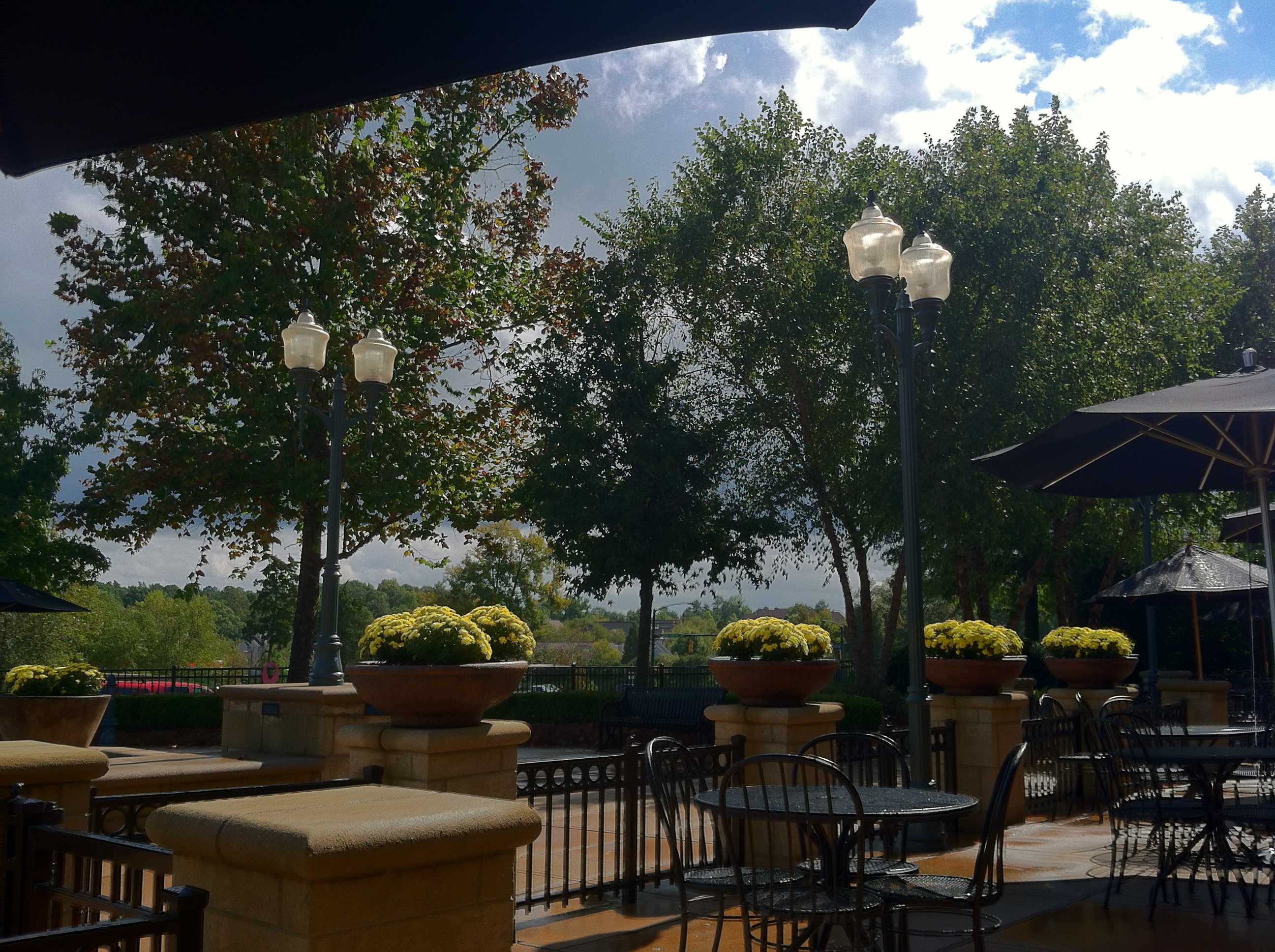
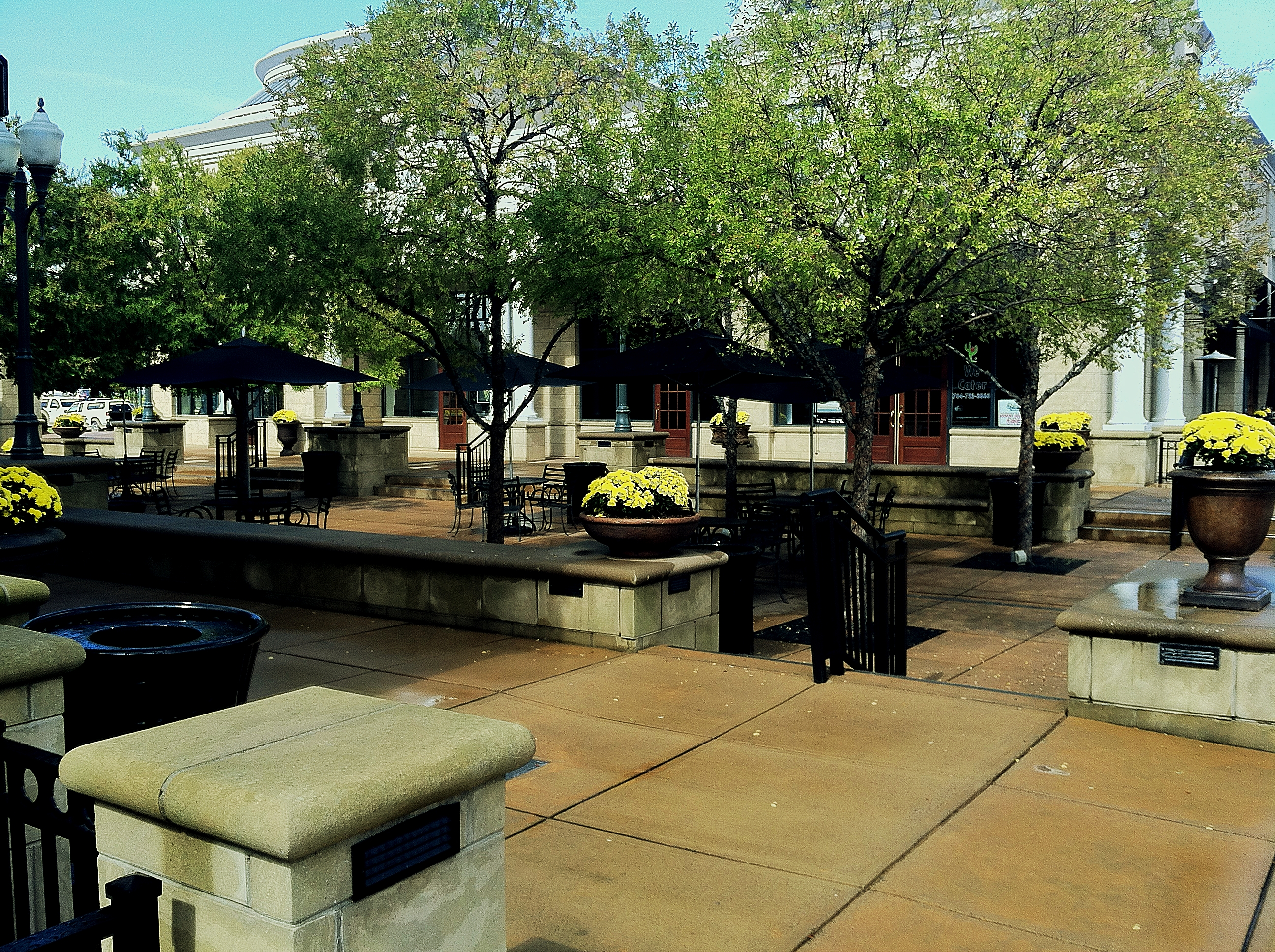
A favorite hang-out | Pink fountain for a good cause. Cheery mums galore.

Favorite weather | Autumn hints, cleansing rain, cloud-break.
Lingering mist.

Favorite time | Post-breakfast desertion. Kids safe at school. Sigh …….

A slice of time,
A shy, favored friend.
A Sliver of Happy.

“Find a place inside where there’s joy, and the joy will burn out the pain.”
~ Joseph Campbell

“A friend is one to whom you may pour out all the contents of your heart, chaff and grain together, knowing that the gentlest of hands will take and sift it, keep what is worth keeping, and with the breath of kindness blow the rest away.” ~ Unknown

“Find the joy in your life. Laugh hard, laugh long, and laugh loud. There is something that brings joy to each of us. Find out what it is for you and work hard to get more of it.” ~ Stephen Deal

__________________________________________________________________

Referring articles:
http://dailypost.wordpress.com/2012/10/05/weekly-photo-challenge-happy/
vimeo.com/stevedeal
(Twenty minutes on decreasing sadness, increasing joy)
https://thoughtfulpaper.wordpress.com/2012/10/06/weekly-photo-challenge-happy/